




Partner Visa Perth Guide: Eligibility, Documents & Timeline
 Asia Pacific Group
- Mar 20, 2026
- 313
- 0

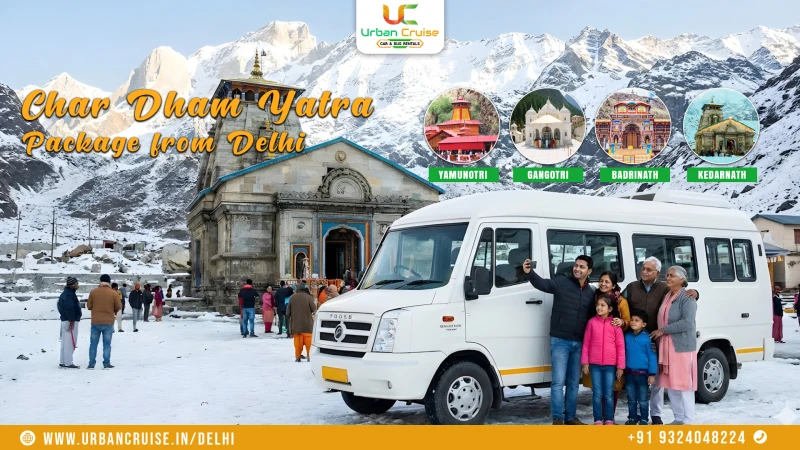
Well-known pilgrimage tracks that best suit 12-seater Tempo Travellers have revolutionized the manner of family and devotee groupings to have spiritual journeys throughout India. These all-rounder vehicles provide the ideal combination of comfort, cost and flexibility, hence becoming an essential in religious tourism. Venturing out on a strenuous mountain trip to the Char Dham, or just giving yourself a ride around the soft south temples, a 12-seater Tempo Traveller will offer a perfect solution to your transportation.
The spiritual nature of India is so varied that it includes Himalayan shrines, coastal temples, and to make matters worse, tours of these spiritual destinations demand good transportation that can carry a group without facing different topography. The 12 seater has become the most ideal setup on long-family pilgrimage, devotee group and planned spiritual tours.
This detailed guidebook will cover all the most fulfilling pilgrimage routes that are best suited in 12 seater Tempo Travellers and will give detailed information regarding the road conditions, the most appropriate time to use the 12 seater Tempo Traveller, accommodation and the most important planning tips. You will find out how this practical vehicle option can boost your spiritual trip and at the same time, everyone will be comfortable and safe in a vehicle.
Why Choose a 12-Seater Tempo Traveller for Religious Journeys
Choosing the appropriate vehicle to use in pilgrimage traveling can greatly influence the experience you get. The 12-seater Tempo Traveller has gained popularity in religious tourism in India and there are reasons why this is so.
Comfort and Space Benefits
As opposed to the tight vehicle spaces or the congested buses, Tempo Traveller 12 seater has good legroom and a comfortable seating setup. Every traveller has his or her own seat, which has enough spacing to accommodate the prolonged trips that pilgrimage paths usually require. The back seat and the ability to create a lot of space to the head make the lengthy journeys over many hours a lot easier, particularly when visiting distant mountain shrines.
The design of the vehicle has got adequate luggage facility, which is very important when transporting religious items, prasad, clothes against different weather conditions and personal effects. They have overhead storage compartments and the rear lumbar compartments, which are capable of holding all the requirements of the occupants without crowding the inside passenger section.
Modern Tempo Travellers have air conditioning systems that are comfortable even when the weather is hot in the scorching plains or rainy in the coastal areas. This air conditioning is especially useful when taking a pilgrimage to the mainstream tourist sites such as Tirupati or Shirdi during summer.
The economics is striking in the case of a 12 seater Tempo Traveller when it comes to pilgrimage in groups. Your group will share a car charge, and instead of paying a fare on multiple cars or buying separate bus tickets, you will save money by a significant margin.
The economy is also heavily reliant on efficiency in terms of fuel. Although larger buses use more diesel and smaller cars need more than one vehicle, the Tempo Traveller has a perfect balance. Also, there are charges for the use of tolls and for parking, among other costs of travelling, which are common to all passengers.
Pilgrimage circuits are very competitive in terms of packages, with many of the rental operators providing accommodation to the driver, which also makes it easier to budget. Such an open pricing system is beneficial since the groups can organise their spiritual trip without any unexpected financial costs.
Popular pilgrimage routes that are best suited in 12-seater Tempo Traveller are usually of rough mountain passes, narrow roads, and inexplicable weather. Such cars are designed to work in such rigorous conditions, with high-quality suspension, and the engines are strong enough to make it up heavy slopes.
Seasoned mountain drivers who have travelled the pilgrimage routes will appreciate the peculiarities of driving through mountains both in terms of hairpin turns, weather conditions, and traffic flow at major shrines. Their knowledge is priceless as they take them through such routes as the Char Dham circuit or the path to Vaishno Devi.
The size of the vehicle also makes it have another safety benefit- it is large enough to offer stability along the mountain roads, and yet it is small enough to navigate through narrow pathways and in crowded temple towns. This is highly necessary on the routes that cannot be reached by larger buses, but the ride is too serious to be done by regular cars.
You may also like this : Everything You Need To Know About Muktinath Pilgrimage
The Char Dham Yatra is one of the most sacred pilgrimage routes of Hinduism that includes four holistic shrines located in the Garhwal Himalayas. This religious pilgrimage is spiritually important and draws millions of followers every year and the 12 seater Tempo Traveller has become the means of transport used by families and groups visiting this difficult pilgrimage.
It involves Yamunotri, Gangotri, Kedarnath and Badrinath - each of which is devoted to a specific deity and provides a special spiritual experience. The whole trip usually takes 10-12 days, with a distance of about 1,500 km of mountain roads at a height of 3,000 to 3,500 meters above the sea level.
This trip is commonly done starting with Yamunotri which is the origin of the Yamuna river and is found at an altitude of 3,293 meters. Your Tempo Traveller can easily reach Hanuman Chatti or Janki Chatti and then a 6 kilometer hike can be made to reach the temple. Dehradun to Yamunotri is a road of about 210 km and it takes 8-9 hours to cover passing through scenic valleys and mountain villages.
Gangotri, which is dedicated to Goddess Ganga is at 3,100 meters, and is reachable by road until the temple. The Rishikesh to Gangotri road is 250 kilometers long which requires around 10 hours to cover covering Uttarkashi and its stunning views of the Bhagirathi River. This portion is also comfortable to Tempo Traveller travel due to the well paved roads but the ability to drive around mountains is of paramount importance.
These routes are operational between April and November, but May-June and September-October are deemed as the best visiting months. In case of landslides every now and then during monsoon seasons and early winter seasons your driver must be ready to take alternative routes at the time.
Kedarnath has its own set of challenges because the shrine is itself a 16 kilometers trek since Gaurikund, or helicopter facilities can be used. On your Tempo Traveller trip, you will arrive in Gaurikund, the place of approximately 220 kilometers of Rishikesh and it will take 8-10 hours as you drive through the beautiful mountainous view. The car offers the much needed rest and comfort before and after the long journey.
The last and possibly the most reachable of the four dhams, Badrinath allows cars to be brought right over to the temple precincts. This 10-12 hour ride is 301 kilometers away on the road to Rishikesh via Joshimath and the route gives breathtaking scenery of the Nilkanth Peak. The road network is usually in good conditions as the traffic volumes and strategic position are increased.
The Char Dham circuit has popular pilgrimage routes that are best served by 12 seater tempos travellers between late April and early November with May-June and September-October being considered as the peak season. During the monsoon months (July-August) there is greater risk of landslides although the sceneries are breathtakingly green.
Strategic route planning: This means that one begins with the starting point, which can be Haridwar or Dehradun and goes in clockwise or counterclockwise depending on the road conditions and the crowd density. The majority of groups use the clockwise direction: Yamunotri-Gangotri-Kedarnath-Badrinath so that gradual accustomation to higher altitudes can occur.
In advance booking is important at high seasonal times particularly in places with less capacity such as Gaurikund and Joshimath. Your Tempo Traveller rented must come with well trained drivers who are conversant with these routes since local knowledge is always invaluable when it comes to time, shortcuts and avoiding traffic jams.
The journey to Mata Vaishno Devi shrine in Jammu & Kashmir ranks among India's most frequented pilgrimages, attracting over 10 million devotees annually. While the final approach requires trekking, the 12-seater Tempo Traveller plays a crucial role in reaching the base town of Katra comfortably and safely.
Katra is about 48 kilometers away in Jammu, and the road is well-maintained; therefore, it is a trip that would take 1.5-2 hours. Nevertheless, the pilgrimage parties drive either out of Delhi, 12-14 hours, about 660 kilometers, or Chandigarh, about 340 kilometers away.
Highways that connect to Katra have been improved tremendously over the last few years and the National Highway 44 is a good route that offers smooth access to Katra. The plains of Punjab will be traveled by your Tempo Traveller as it enters the foothills of Jammu where the roads start climbing slowly.
The Delhi-Jammu road cuts through Ambala, Chandigarh and gives numerous rest house and eating joints. Majority of the drivers also like driving at night or at very early hours in the morning, so that they do not have to be in the traffic and this case is especially during peak pilgrimage seasons such as Navratri.
Katra in itself has a wide range of accommodation to include low-end dharamhalas to comfortable hotels, most of which are within walking distance of the trek starting point. Your Tempo Traveller will even deliver your group of people to your preferred accommodation of choice and even most of the hotels will be providing luggage storage options as you undergo the 13 kilometer uphill hike to the shrine.
During the trip between the metropolises, there are several resting houses offering a meal and drinks. Jalandhar and Pathankot are popular stopover towns during long journeys, where the groups usually have an over night stay in between to help the driver to rest because of the long distance.
Most pilgrims prefer to explore local sites such as Shiv Khori Cave Temple or the Patnitop hill station which is conveniently situated and reachable once you have done the Vaishno Devi darshan in your Tempo Traveller.
The Amarnath Yatra of seeing the natural ice Shivalinga every year is one of the most difficult and spiritually valuable pilgrimages of Hinduism. Although the last one is the walking or helicopter services, the 12 seater Tempo Traveller is the necessary means of transportation to the base camps.
The pilgrimage is run within a narrow season of June through August and it has two main options; the traditional Pahalgam route (36-48 kilometers one way) and the shorter but steeper Baltal route (14 kilometers one way). Your Tempo Traveller proves important in the journey of reaching these base camps in Srinagar, which is around 93 kilometers to Pahalgam and 108 kilometers to Baltal.
The roads leading to the two bases are usually good and need skilled mountain driving skills. Pahalgam is accessible in 3-4 hours and traverses spectacular landscapes of Kashmir Valley, comprising of Anantnag and Liddar River valley. The Baltal route is reached by Sonamarg and also provides equally spectacular view but by narrower roads through the Sind Valley.
The Amarnath Yatra has rigorous registration and security measures which involve pre-booking and health certificates. Your Tempo Traveller group will also be subjected to a number of security checks, and the drivers should be equipped with valid permits in the restricted areas.
Golden Triangle generally denotes Delhi-Agra- Jaipur tourist circuit, in pilgrimage, the holy cities of the Ganges and Yamuna rivers are encompassed. The area has a wide range of temple circuits that can be explored by 12 seater tempo traveller.
The circuit of Mathura-Vrindavan-Agra praises the place of birth of Lord Krishna and his childhood experiences, and the major sites are separated by about 50-60 kilometers. Mathra is 180 kilometers away by the Yamuna Expressway, which is a paved road and comfortable to travel over in 3 hours, through Delhi.
The 25- kilometers distance between the Haridwar and Rishikesh gives access to many Himalayan temples. Haridwar is 220 kilometers, or a 5-6 hour journey, away in the north, the starting point of long pilgrimages of which many groups make a point of visiting.
Recent developments of temples have made Ayodhya in Uttar Pradesh a new important place. It is 135 kilometers distant to Lucknow and 650 kilometers to Delhi, and draws more and more visitors to it as a destination in multi-day pilgrimage circuits together with Varanasi (200 kilometers away) and Prayagraj (165 kilometers).
This is a perfect circuit as it can include all these riverside temples with the Himalayan ones that are challenging to reach and achieve the goals that are set by the groups of varied fitness. Your 12 seater Tempo Traveller offers the option of changing the itineraries as per the group and weather conditions.
Beginning with Haridwar, when the Ganges spills into the plains, you then enter the religious ashrams of Rishikesh before heading into the mountains. Location Devprayag, Rudraprayag and Joshimath are the three passes which connect Badrinath to Rishikesh, and a distance of about 300 kilometers is possible, a journey that takes 10-12 hours with breaks.
This route permits the addition of other holy places such as Devprayag, where the rivers Alaknanda and Bhagirathi come together to create the Ganges and Rudraprayag where the river Alaknanda joins the Mandakini. These intersections are very important in terms of spiritual importance and they cause very little diversion to your trip.
Other groups also continue this circuit up to Hemkund Sahib, an important Sikh pilgrimage center near Joshimath. The Tempo Traveller also accesses Govindghat, through which a 13 kilometer walk is done to reach this gurudwara located at a high altitude.
The holistic triangle of Shirdi, Nashik and Trimbakeshwar in Maharashtra is a readily available but spiritually satisfying pilgrimage circuit. There are great road networks and distances that make popular pilgrimage routes in this region ideal routes that the 12 seater Tempo Traveller should use.
Millions of devotees come to Shirdi, which is the residence of the samadhi of Sai Baba throughout the year. The 240km ride, starting in Mumbai takes 4-5 hours over Mumbai-Nashik Expressway, which is one of the best highways in India. Shirdi is an easy 3-4 hour drive 185 kilometers away, at Pune.
One of the four cities that host Kumbh Mela is Nashik; it is located 90 kilometers away (Shirdi) and it takes around 2 hours to travel to Nashik. One of the twelve Jyotirlingas is Trimbakeshwar which is only 30 kilometers away and will only consume an extra 45 minutes to Nashik.
The circuit can easily be covered within 2-3 days with good accommodation facilities at each of the three places. Its roads are very well maintained throughout the year and as such this route is open throughout the year not to mention that during monsoon season when mountain pilgrimages are difficult to make.
Successful pilgrimage experiences require thorough preparation beyond just booking transportation. Understanding the practical aspects of traveling in a 12-seater Tempo Traveller enhances comfort and ensures smooth journeys.
The choice of a good Tempo Traveller rental company will be the basis of your pilgrimage success. Research operators who have the special experience in the area of religious tourism as they are aware on the special needs such as early morning visitation of the temples and stay at the proximity to the spiritual places.
Check the car before getting onto it, its condition, tire quality, air conditioner functionality and comfort of the seat. Ask for recent maintenance history and also make sure the rental has extensive insurance cover. In the case of mountain routes, ensure the vehicle has been serviced to work in the high-altitude.
The experience of the driver is also very important particularly on difficult routes such as Char Dham or Amarnath. Ask the request drivers who are conversant with your particular pilgrimage route who are aware of the local road, weather, and the best time to travel. There are a lot of operators who offer profiles and reviews of drivers working in previous religious tours.
What to Pack when Traveling in a Religious Way.
It is very important to have climate suitable clothing because pilgrimage paths usually cross various climatic zones. Mountain circuits demand piled clothes, warm-up jackets and comfortable trekking shoes whereas southern circuits demand light breathable clothes and sun protection. Bring small clothes that can be worn to the temple in every single place.
The first aid kit must contain medication against altitude sickness in case of Himalayan routes, other common medications, against an upset stomach, motion sickness medications, first-aid, and any medication that will be needed based on prescription. A rudimentary medical first aid kit is particularly essential when going to the isolated areas with small pharmacy coverage.
Religious objects could be prayer books, rosaries, miniature idols or certain offerings necessary at various temples. But, there are regulations of check temples at some shrines that forbid some things. These items fit well in the storage space of Your Tempo Traveller and do not clutter up passenger spaces.
Frequently Asked Questions
1. How much will it cost to hire a 12 seater Tempo Traveller to take pilgrimage routes?
The prices of renting depend considerably on route, season and distance. In the case of popular pilgrimage routes that are suitable to use 12-seater Tempo Travellers, the prices of simple packages in the range of ?18-25 per kilometer, and the minimum daily cost of 4-6,000. High-end packages that include new cars and drivers have a cost of between 25-35 per kilometer. Full trip tours such as Char Dham Yatra (10-12 days) cost around 1,20,000-1,80,000 including travel whereas shorter routes such as Shirdi-Nashik (2-3 days) cost around 25,000-40, 000. Himalayan routes have high pilgrimage seasons such as Navratri, Shravan and summer seasons, whose prices go up.
2. What is the number of days I should plan to spend in the Char Dham Yatra in a Tempo Traveller?
The entire Char Dham circuit takes at least 10-12 days to complete without the need to hurry up. These are the time spent in travelling in between the four mountains (2 days) in the city of Delhi/Haridwar, the time taken to visit each of the four shrines with its respective trekking time (6-7 days), and the time spent returning (1-2 days). It is recommendable to add days of rest or weather delay, and make the journey take 12-14 days.
3. Will a 12 seater Tempo Traveller go up mountainous roads such as Kedarnath base?
Yes, there are special 12 seater Tempo Traveller specially designed to go on mountain which has strong engines, strong suspension system, and good braking systems. They can easily climb steep slopes, hairpin turns, and roads that are narrow and typical of pilgrimage paths to Himalayan shrines. Nevertheless, the skills of the driver who has experience in driving in the mountains are as well vital as the capabilities of the vehicle.
4. Which is the most preferable time of the year to pilgrimage travel in a Tempo Traveller to various areas?
The best seasons also depend on the location: Himalayan routes (Char Dham, Amarnath, Hemkund Sahib) are possible between May-October, with May-June and September-October being the best times without monsoon-related risks. Southern temples such as Tirupati and Rameswaram are open all year round, but during November-February they have got a pleasant weather. The best pilgrimages to Rajasthan are during the months of October-March when the weather is not hot. Vaishno Devi is also available throughout the year, but the months of March-October are pleasant.
5. I know that my group has a lot of luggage, but I need to make sure that the luggage will fit in a 12 seater Tempo Traveller.
The Tempo Travellers have ideal overhead rack with each seat and a specific back luggage space. To maximize packing, liaise with your group members to reduce the number of duplicates and promote sharing of necessities. The amount of carry-on is one medium size suitcase or backpack with a small carry-on bag per passenger. Luggage with soft covers is easily accommodated to the overhead baggage. The back compartment will hold 8-10 medium sized suitcases with ease.
The most popular pilgrimage paths that can be covered with 12-seater Tempo Travellers provide Indian spiritual tourists and foreign believers with the best chances of having sacred pilgrimages without spending a lot of money. Religious tourism has been transformed by these all-rounder vehicles, whether it is the tough circuits of Himalayan Char Dham and Amarnath or the easy-reachable tours of Tirupati and Rameswaram temples.
The 12-seater layout is the most reasonable balance between the size of the group and handling the vehicle, since it provides the opportunity to include extended families, devotee groups, and organized tours in the vehicle without losing comfort during the long rides. These Tempo Travellers offer safe and comfortable travel in the rugged mountain gears or in the smooth southern highways of India and these are uniquely built to handle the varied terrain of India.
Pilgrimage planning is not a matter of booking a vehicle and it is not as simple as that but involves knowing the particulars of the route, season, places to stay, and other practical preparations to be made. This is a complete information guide that has made you ready to organize rewarding spiritual tours to the most important pilgrimage circuits in India.